The convergence of traditional finance (TradFi) and decentralised finance (DeFi) has given birth to a transformative asset class: tokenised stocks. As the digital asset ecosystem matures, indexpo.com presents this comprehensive guide to help investors, builders, and curious observers navigate the shift from paper certificates to blockchain-based equities.
Disclaimer: This article is for informational purposes only and does not constitute financial, investment, or legal advice. Investors should conduct their own due diligence and consult with professional advisors before engaging in digital asset trading.
What Are Tokenised Stocks?
At its core, stock tokenisation is the process of creating a digital representation of a traditional share on a blockchain. Unlike “utility tokens” or “meme coins,” which derive value from network effects or speculation, a tokenised stock is a Real-World Asset (RWA).
According to research by the Boston Consulting Group (BCG), the tokenisation of global illiquid assets is projected to be a $16.1 trillion opportunity by 2030 (BCG, 2022). Tokenised stocks represent a significant pillar of this movement.
Defining the Concept
A tokenised stock is a digital token that tracks the value of a specific company’s equity (e.g., Apple, Tesla, or Amazon). Depending on the issuer’s structure, these tokens can be:
- Directly Backed: 1:1 ownership of the underlying share held by a regulated custodian.
- Synthetic/Derivative: A token that mirrors the price action of a stock without the issuer necessarily holding the physical share.
The Commodity Analogy
To understand tokenised stocks, look at tokenised gold (e.g., PAXG or XAUT). In those cases, one token represents one fine troy ounce of a London Good Delivery gold bar. Similarly, on indexpo.com, we view tokenised stocks as a “claim” or “exposure” to a corporate share, bridging the gap between legacy brokerage accounts and digital wallets.
How Do Tokenised Stocks Work?
The journey from a Wall Street exchange to a blockchain involves a sophisticated blend of legal frameworks and technical architecture.
1. From Shares to Tokens: The Process
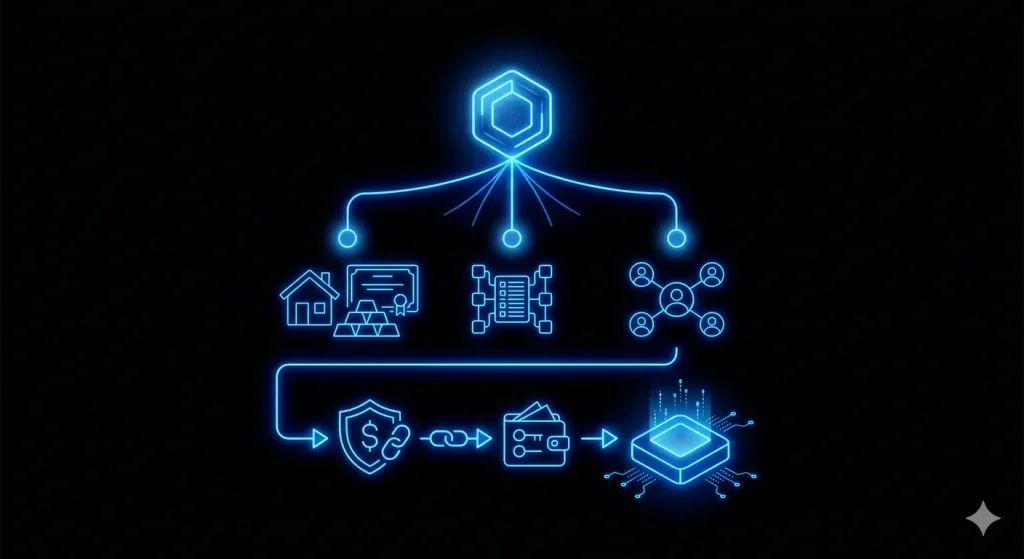
- Acquisition: A licensed entity (a broker-dealer or Special Purpose Vehicle) purchases shares on a traditional exchange, such as the NYSE.
- Custody: These shares are stored with a regulated custodian to ensure they are segregated from the issuer’s operational funds.
- Minting: A smart contract issues a specific number of tokens on a blockchain (typically Ethereum or a Layer 2) that correspond to the shares held.
- Fractionalization: Because tokens are divisible, a single share of a high-priced stock can be split into thousands of digital units.
2. Technical Architecture: Oracles and Smart Contracts
The “glue” holding this together is the Oracle. In DeFi, an oracle (like Chainlink) feeds real-time price data from traditional markets to the blockchain.
- Oracle Risk: If an oracle provides an incorrect price or experiences latency, it can trigger “false” liquidations in DeFi protocols. indexpo.com emphasises that the “on-chain” price must remain synchronised with the “off-chain” spot price to maintain market integrity.
3. Legal and Custodial Layers
Unlike Bitcoin, tokenised stocks rely on a centralised counterparty. You are trusting that the issuer actually holds the shares they claim to. This makes the issuer’s legal jurisdiction, whether the EU (under MiCA regulations) or the US, critical for investor protection.
Tokenised Stocks vs Traditional Stocks
| Trading Hours | 9:30 AM – 4:00 PM (EST) | 24/7/365 |
| Settlement | T+2 (Two business days) | Near-instant (Seconds/Minutes) |
| Minimum Investment | Usually 1 share (unless broker allows) | Micro-fractions (e.g., $5 of Tesla) |
| Ownership | Registered in your name/Street name | Held by custodian; you own the token |
| Composability | Limited to traditional brokerage | Can be used as collateral in DeFi |
Benefits of Stock Tokenisation
1. 24/7 Global Market Access
Traditional markets sleep; blockchains do not. Tokenised stocks allow an investor in Singapore to trade Amazon shares at 3:00 AM on a Sunday. This liquidity provides a continuous exit/entry point that was previously impossible.
2. Fractional Ownership
A high-priced stock like Berkshire Hathaway Class A ($600,000+) is inaccessible to most. Tokenisation enables “fractionalized shares,” lowering the barrier to entry to as low as $1.
3. DeFi Integration and Composability
One of the most exciting prospects highlighted by indexpo.com is composability. You could potentially use your tokenised Apple shares as collateral to borrow stablecoins, which can then be reinvested into other assets, all without selling your original position.
4. Transparency and Reduced Costs
By removing multiple layers of intermediaries (transfer agents, clearinghouses), tokenisation can reduce the “back-office” costs of trading. Every transfer is recorded on a public ledger, providing an immutable audit trail.
Risks and Challenges
While the technology is promising, indexpo.com urges caution regarding the following risks:
1. Regulatory and Compliance Uncertainty
The SEC and other global regulators are still defining whether certain tokens are “unregistered securities.” A sudden regulatory shift could prompt platforms to delist assets or freeze withdrawals.
2. Custody and Counterparty Risk
If the issuing platform goes bankrupt or the custodian loses the underlying shares, the token holder may have limited legal recourse compared to a traditional brokerage account protected by SIPC insurance.
3. Liquidity Risk and Price Discrepancies
During periods of high volatility, the on-chain price of a tokenised stock may “de-peg” from its underlying stock price. If there are not enough buyers or sellers on the blockchain, the spread (the difference between buy and sell price) can become prohibitively expensive.
Real-World Use Cases
Public Equity Access
Platforms are currently offering “wrapped” versions of blue-chip stocks. This allows users in emerging markets, who may lack access to US brokerage accounts, to participate in the growth of global tech giants.
Private Company Equity
Startups are increasingly using tokenisation to manage their Cap Tables. By tokenising employee stock options or early investor equity, they can provide “secondary liquidity,” allowing stakeholders to sell their stakes on private digital exchanges before an IPO.
The Commodity Parallel
We can learn from tokenised gold. Data from Keyrock (2023) suggests that while tokenised gold (PAXG) provides excellent transparency, its DeFi adoption has been slower than expected due to low on-chain liquidity. Tokenised stocks may face a similar “adoption curve” where market-making must catch up to the technology.
How to Invest in Tokenised Stocks: Step-by-Step
- Check Local Regulations: Ensure that your country allows the trading of security tokens. US and UK residents, for example, often face stricter limitations.
- Choose a Reputable Platform: Look for platforms that are transparent about their audits and custodial partners. Check indexpo.com for reviews on the latest tokenisation infrastructure.
- Verify the Structure: Is the token “fully backed”? Read the whitepaper or “Terms of Service” to see if you are entitled to dividends or voting rights.
- Practice Risk Management: Never invest more than you can afford to lose. Given the risks of oracles and smart contracts, tokenised stocks should be viewed as a higher-risk component of a diversified portfolio.
The Future of the Ecosystem
As we look toward 2026 and beyond, we expect Institutional Adoption to lead the way. Large investment banks like J.P. Morgan and BlackRock are already testing “tokenised collateral” systems.
The ultimate goal is a unified ledger where stocks, bonds, and real estate trade seamlessly alongside digital currencies. While challenges in liquidity and global regulation remain, the shift toward on-chain equity appears inevitable.
Conclusion: The Future of Equity on the Ledger
The rise of tokenised stocks represents more than just a technological trend; it is a fundamental shift in how global capital markets operate. By stripping away the geographical and operational barriers of traditional brokerage systems, stock tokenisation democratises access to the world’s most successful companies. Whether it is a retail investor in an emerging market purchasing 0.01% of a blue-chip tech stock or a DeFi protocol using tokenised equity as high-quality collateral, the utility of Real-World Assets (RWAs) is becoming undeniable.
However, as indexpo.com emphasises throughout this guide, the transition to an “on-chain” financial system is not without its hurdles. The industry must continue to address liquidity fragmentation, refine oracle reliability to prevent mispricing, and work with global regulators to ensure robust investor protections. The parallel growth of tokenised commodities, such as gold, provides a roadmap showing that while the infrastructure is ready, market maturity requires time, institutional trust, and standardised legal frameworks.
As we move toward a future where “T+2” settlement feels like a relic of the past, tokenised stocks stand at the forefront of a $16 trillion opportunity. For investors and builders alike, staying informed through neutral, data-driven resources like indexpo.com is the first step toward navigating this borderless financial frontier.
Frequently Asked Questions (FAQs) About Tokenised Stocks
1. What exactly is a tokenised stock?
A tokenised stock is a digital representation of a traditional company share (like Apple or Tesla) issued on a blockchain. These assets, often categorised as Security Tokens, bridge the gap between traditional equity markets and the 24/7 digital asset ecosystem. On indexpo.com, we define them as programmable claims on the economic value of underlying shares.
2. Do tokenised stocks give me the same rights as owning real shares?
Not necessarily. While traditional shares often grant voting rights and direct legal ownership, tokenised stocks are typically held by a custodian. Your rights depend on the platform’s legal structure; some “pass through” dividends and voting rights via smart contracts, while others only provide exposure to the stock’s price movements.
3. Are tokenised stocks legal in my country?
Legality varies significantly by jurisdiction. Many regions, including the EU (under MiCA) and Switzerland, have established frameworks for security tokens. However, in other regions, they may be restricted to “accredited investors” or banned entirely. Always verify your local securities laws before trading on any platform.
4. How are tokenised stocks different from stock CFDs?
Contracts for Difference (CFDs) are purely synthetic derivatives where you bet on price changes without any underlying asset being moved. Tokenised stocks, particularly “backed” ones, involve an actual purchase of shares by a custodian. Furthermore, tokenised stocks offer on-chain transparency and composability (the ability to use them in DeFi), which traditional CFDs do not.
5. Can tokenised stocks pay dividends?
Yes, many platforms support dividend payments. When the underlying company pays a dividend, the custodian receives it and automatically distributes the equivalent value to token holders, usually in stablecoins, via smart contracts. Check the specific asset’s documentation on indexpo.com to confirm dividend eligibility.
6. Are tokenised stocks backed 1:1 by real shares?
This depends on the issuer. “Asset-backed” tokens are typically backed 1:1 by physical shares held in a regulated brokerage account. However, “synthetic” tokens use collateral (such as stablecoins) and price oracles to track the stock price without owning the underlying shares. Always look for “Proof of Reserve” or audit reports.
7. Why can the price of a tokenised stock differ from the real stock price?
Price discrepancies, or “premiums/discounts,” arise from differences in liquidity. If there are fewer traders on-chain than on the NYSE, a large buy order can move the price disproportionately. Additionally, if the market for the underlying stock is closed but the tokenised market is open, the token price may reflect “after-hours” sentiment that hasn’t yet reached the traditional exchange.
8. Can I redeem tokenised stocks for real shares or cash?
Redemption policies vary. Some regulated issuers allow verified users to “burn” their tokens and receive the underlying shares in a traditional brokerage account. Others only allow for cash-equivalent redemption (selling the token back for stablecoins or fiat).
9. What happens if the platform or custodian fails?
This is a primary counterparty risk. If a platform is not properly regulated or if its assets are not legally segregated, investors could lose their holdings in a bankruptcy. To mitigate this, indexpo.com recommends choosing platforms that use independent, third-party licensed custodians.
10. Are tokenised stocks suitable for long-term investing?
While they offer the benefits of fractional ownership and 24/7 access, they carry unique technical risks (smart contract bugs, oracle failures) and regulatory risks. They can be part of a long-term strategy for those seeking global access or DeFi utility, but they should be balanced against the established protections of traditional brokerage accounts.