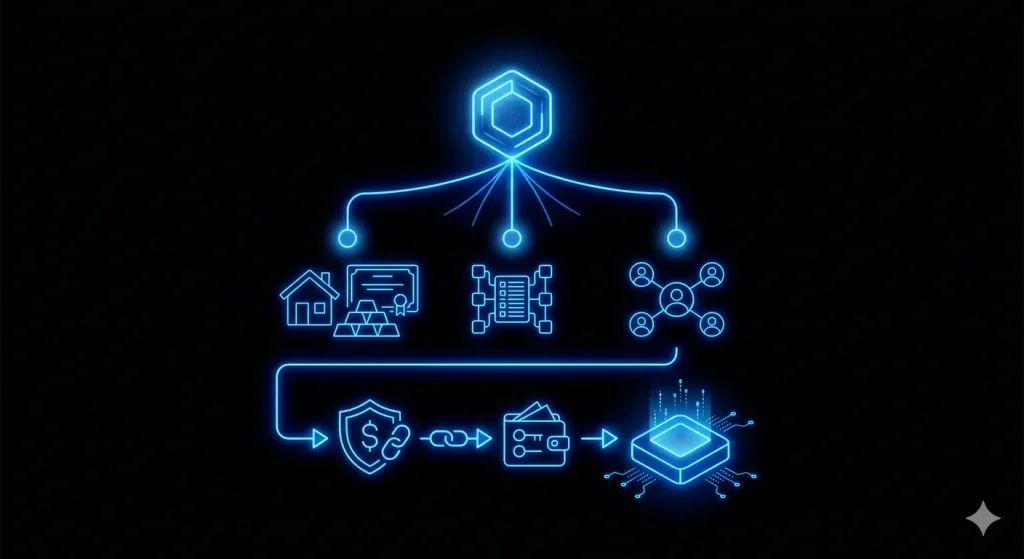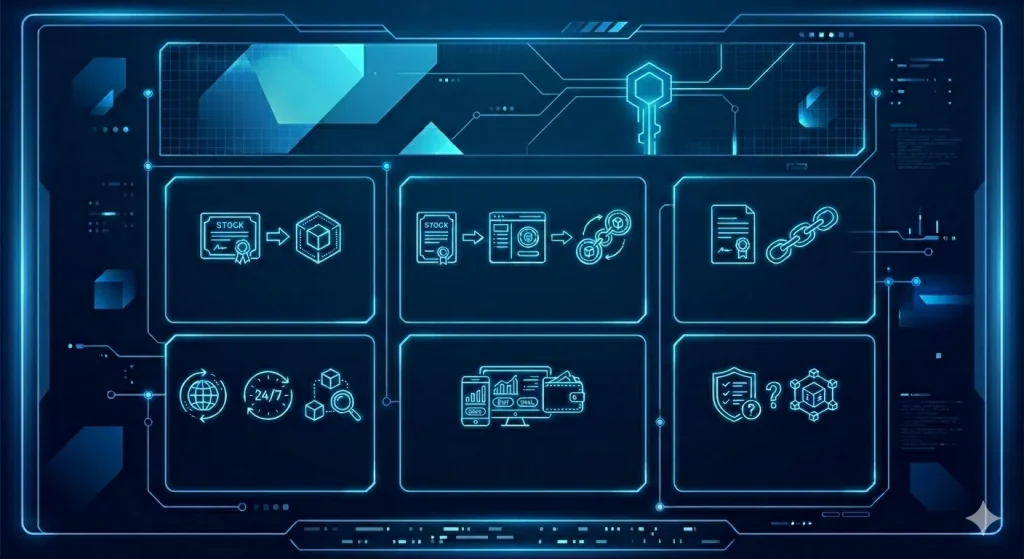
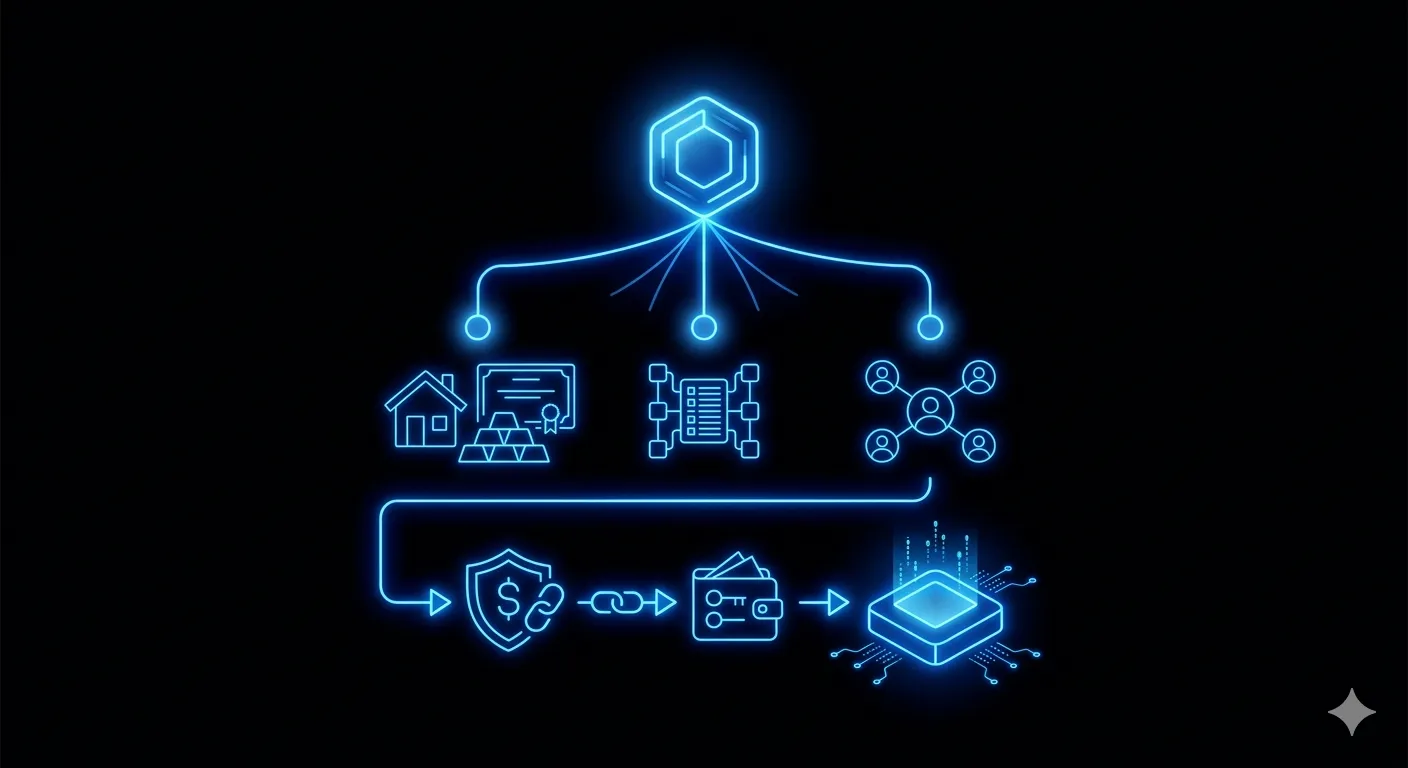
A Tokenised Security Offering (TSO) marks a transformative leap in capital raising and management. Essentially, it transforms traditional investment securities, equity, debt, or stakes in tangible assets, into digital tokens secured on a blockchain. Unlike the unregulated utility tokens of early crypto days, tokenised securities are powerful financial instruments that confer legally enforceable rights, such as profit-sharing and voting privileges.
As of 2026, the global market for tokenised securities has transitioned from experimental pilots to institutional reality. According to recent industry data, the market is projected to reach $7.93 billion in 2026, expanding at a compound annual growth rate (CAGR) of 19% through 2035 (Business Research Insights, 2025). This growth is driven by demand for “programmable finance,” in which compliance and administrative tasks are embedded directly into the asset itself.
This guide provides a comprehensive breakdown of TSO structures, legal requirements, and the strategic advantages they offer to modern issuers and investors, positioning Indexpo as your central resource for navigating this digital transformation.
What Is a Tokenised Security Offering?
A Tokenised Security Offering is the issuance of regulated securities as digital tokens. These tokens act as digital “wrappers” or representations of underlying assets.
Key Distinction: The token is not the asset itself; rather, it is a digital receipt or certificate representing a legal claim to an underlying instrument (e.g., a share in a company or a fraction of a property).
- Stock Tokenisation: Digital tokens representing shares in a private or public company.
- Real Estate Tokenisation: Digital tokens representing fractional ownership in a specific property or a Real Estate Investment Trust (REIT).
Tokenised Securities vs Utility Tokens vs Traditional Securities
Understanding the differences between these categories is critical for regulatory compliance and investor protection.
Tokenised Securities vs Utility Tokens
| Primary Purpose | Investment and capital appreciation | Access to a service or ecosystem |
| Underlying Value | Linked to assets, debt, or cash flow | Linked to network demand/usage |
| Regulation | Heavily regulated (Securities Laws) | Often less regulated (varies by region) |
| Investor Rights | Dividends, voting, or interest | Typically no ownership rights |
Tokenised Securities vs Traditional Securities
Though they share identical legal rights, tokenised securities leverage blockchain technology for settlement and record-keeping. This innovation enables fractional ownership—breaking assets into accessible pieces—and automates compliance through smart contracts.
Key Components of a Tokenised Security Offering
Launching a successful TSO requires seamless coordination across four essential layers:
1. The Underlying Asset
The “source of value.” This can be company equity, corporate bonds, or high-value physical assets, such as commercial real estate.
2. Legal Structure
Issuers typically use a Special Purpose Vehicle (SPV) to hold the assets. Legal documentation, such as a Private Placement Memorandum (PPM) or a prospectus, must be drafted to ensure the tokens are legally recognised in the jurisdiction of issuance (Indexpo, 2026).
3. Technical Layer
Tokens are minted in accordance with specific standards designed for compliance.
- ERC-3643: A leading standard that includes a “validator” system to check investor eligibility before every transfer.
- ERC-1400: A “library” of standards that supports partitions (e.g., separating restricted and non-restricted shares).
4. Compliance Layer
This layer enforces mandatory Know Your Customer (KYC) and Anti-Money Laundering (AML) protocols. In numerous regions, secondary trading is limited to “Whitelisted” wallets, addresses vetted by licensed authorities.
Step-by-Step Breakdown of a TSO Process
- Deal Structuring: Defining the offering type (equity, debt, etc.) and selecting the regulatory exemption (e.g., Reg D or Reg S in the U.S.).
- Legal Documentation: Drafting the subscription agreements that link the token to the legal rights of the issuer.
- Technology Integration: Selecting a tokenisation platform to deploy smart contracts.
- Investor Onboarding: Conducting digital KYC/AML and verifying “Accredited Investor” status where required.
- Issuance: Minting the tokens and distributing them to the investors’ digital wallets.
- Asset Management: Automated distribution of dividends or interest payments directly via the blockchain.
- Exit/Redemption: Managing buybacks or the eventual sale of the underlying asset.
Benefits of Tokenised Security Offerings
For Issuers (Startups & Asset Owners)
- Access to Global Capital: Tokenisation lowers geographic barriers, allowing for broader distribution.
- Lower Costs: Automation of the “cap table” (shareholder list) and dividend distributions can reduce administrative overhead.
- Liquidity Premium: Converting illiquid assets (such as private equity) into tradable tokens can increase the asset’s overall value.
For Investors
- Fractional Ownership: The ability to invest in “blue-chip” real estate or venture capital funds with as little as $1,000.
- 24/7 Markets: Unlike traditional stock exchanges, blockchain-based markets can operate continuously.
- Transparency: All transactions and ownership records are immutable and verifiable on-chain.
Risks and Challenges
Despite the benefits, TSOs carry unique risks:
- Regulatory Uncertainty: Only about 30% of countries currently have clear, comprehensive regulatory frameworks for digital assets (Business Research Insights, 2025).
- Technical Risk: Smart contract vulnerabilities or the loss of private keys can lead to a total loss of funds.
- Liquidity Risk: While tokens can be traded, a robust secondary market may not yet exist for niche assets.
How to Evaluate a Tokenised Security Offering
Before participating in a TSO, use this checklist for due diligence:
- Regulatory Compliance: Has the issuer filed with the relevant authorities (e.g., SEC, FCA, or BaFin)?
- Asset Valuation: Is there a recent, independent audit of the underlying asset?
- Smart Contract Audit: Has the code been reviewed by a reputable cybersecurity firm?
- Platform Credibility: Is the issuance platform licensed and transparent?
Disclaimer: This guide is for educational purposes only and does not constitute legal, tax, or investment advice. Always consult with a qualified professional before participating in a security offering.
The Future of Tokenised Capital Markets
The emergence of Tokenised Security Offerings marks a fundamental shift from legacy financial systems to a digitally native infrastructure. By merging the legal rigour of traditional securities with the programmable efficiency of blockchain, TSOs offer a path toward more inclusive, transparent, and liquid capital markets. As we move through 2026, the integration of smart contracts for automated compliance and dividend distribution is no longer a concept; it is an operational standard. For startups and asset owners, this means lower administrative barriers and access to a global pool of capital; for investors, it unlocks access to high-value asset classes such as private equity and commercial real estate through fractional ownership.
However, the transition to a fully tokenised economy requires a disciplined approach to regulation and due diligence. While the technical advantages are clear, the legal reality remains paramount; a token is only as valuable as the legal rights it represents and the regulatory framework that protects it. As institutional adoption grows and global standards like ERC-3643 become more prevalent, the distinction between “digital” and “traditional” securities will likely fade, leaving tokenisation as the primary vehicle for all financial instruments. To stay ahead of these shifts and explore the evolving landscape of RWAs and digital finance, continue your journey with the expert resources available at indexpo.com.
Frequently Asked Questions
Is a TSO the same as an STO?
Yes, the terms are often used interchangeably. A Security Token Offering (STO) is the most common industry term for this process.
Are tokenised securities legal?
They are legal, provided they comply with the securities laws of the countries in which they are offered and sold.
Which blockchain is best for a TSO?
Most TSOs currently occur on Ethereum due to its established standards, though “Permissioned” blockchains are increasingly popular for institutional issuances.
Can retail investors buy tokenised securities?
It depends on the specific offering. Many are restricted to Accredited Investors, but some jurisdictions allow retail participation under specific crowdfunding exemptions.