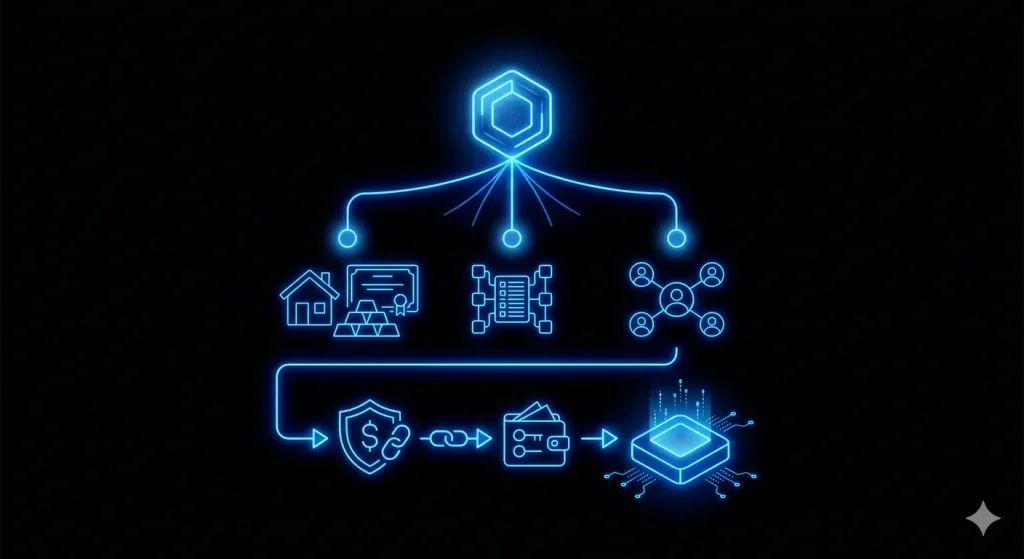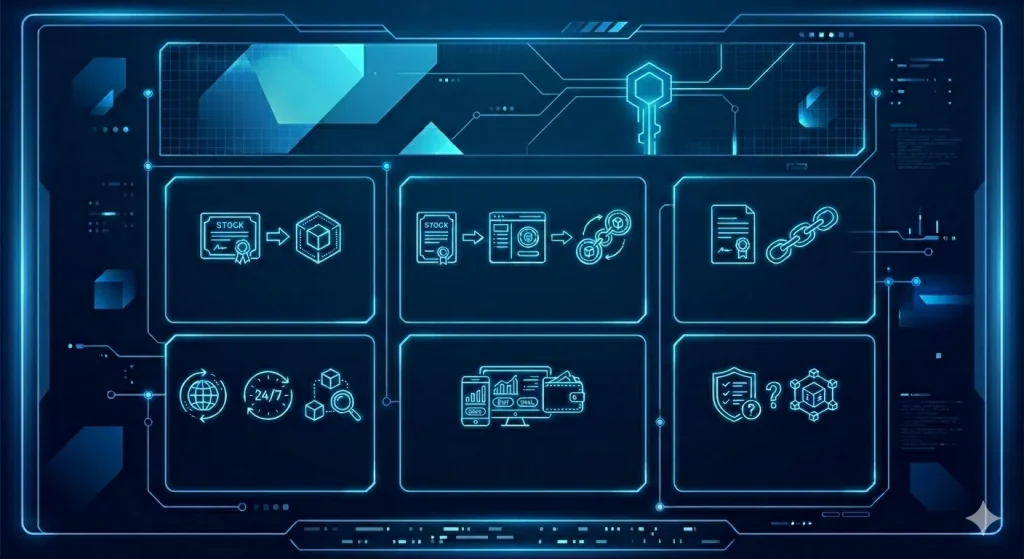

The financial landscape is witnessing a structural migration. What once felt experimental is now becoming infrastructure. As traditional financial instruments ranging from US Treasuries to private credit and real estate move onto the ledger, the definition of “RWA” is undergoing a critical evolution. In traditional banking, RWA stands for Risk-Weighted Assets (the denominator used to determine capital requirements under Basel III); however, in the blockchain ecosystem, it signifies Real-World Assets.
For the institutional investors and DeFi researchers at Indexpo, bridging this gap requires more than just enthusiasm for “on-chain” efficiency. It requires the same discipline applied to any serious financial system. To evaluate the health of a tokenised ecosystem, one must look beyond surface-level hype and apply the analytical rigour of banking standards to the transparency of decentralised protocols.
In the early days of DeFi, Total Value Locked (TVL) was the undisputed king of metrics. However, for RWAs, TVL alone is a “vanity metric” that can obscure a platform’s actual economic utility.
TVL vs Assets Under Management (AUM)
In a standard DeFi protocol (like Uniswap), TVL represents liquidity sitting in a pool. In the RWA sector, Assets Under Management (AUM) is a more accurate term. It represents the market value of all underlying assets, such as the face value of tokenised T-bills or the appraised value of a real estate portfolio currently managed by the protocol. The distinction is subtle, but critical: one measures deposits, the other measures deployed capital.
Active Loans & Outstanding Credit
While TVL tells you what is stored, Active Loans and Outstanding Credit tell you what is working. For private credit protocols like Centrifuge or Maple Finance, these metrics measure the actual utilisation of capital. High TVL with low active credit suggests an inefficient “drag” on capital, whereas high outstanding credit indicates robust demand for the protocol’s liquidity.
Originator Diversity
A critical risk metric is the number of Asset Originators. If a protocol relies on a single entity to bring loans on-chain, it creates a “key person” risk. A healthy RWA ecosystem at Indexpo should demonstrate a diverse array of originators across different jurisdictions to mitigate systemic failure. Concentration may be efficient in the short term, but it rarely is resilient.
Financial Performance & Yield Analysis
Institutional capital flows toward risk-adjusted returns. To evaluate RWA performance, we must translate on-chain distributions into traditional financial ratios.
Average APR/APY vs The Risk-Free Rate
The performance of an RWA must be benchmarked against the Risk-Free Rate (RFR), typically represented by the yield on 10-year US Treasuries. If a private credit RWA offers 8% APY while the RFR is 4.5%, the “spread” (3.5%) must be justified by the credit risk and illiquidity premium.
Default Rates & Delinquencies
Unlike crypto-native lending (Aave/Compound), which uses over-collateralization (depositing $1.50 in ETH to borrow $1.00), many RWAs utilise under-collateralised private credit. Investors must track:
- Delinquency Rate: The percentage of loans with payments overdue (usually 30, 60, or 90 days).
- Default Rate: The percentage of loans unlikely to be repaid in full.
- According to recent data from rwa.xyz, the blockchain’s transparency allows these rates to be tracked in near real time, providing a “truth machine” that was absent during the 2008 financial crisis.
Protocol Revenue and Net Interest Margin (NIM)
Net Interest Margin (NIM) is a classic banking metric defined as:
$$\text{NIM} = \frac{(\text{Investment Returns} – \text{Interest Paid})}{\text{Average Earning Assets}}$$
For an RWA protocol, this reveals the “spread” the platform captures after paying out yield to liquidity providers and covering operational costs.
Risk & Transparency Metrics: The “Trust Factor”
The primary hurdle for institutional adoption is the “oracle problem”—the bridge between the physical asset and its digital twin.
Collateralization Ratio
This tracks the buffer against asset price volatility. In tokenised real estate, this is often expressed as Loan-to-Value (LTV). An LTV of 60% means the loan is backed by 166% of the asset’s value, providing a 40% “cushion” before the principal is at risk.
Proof of Reserves (PoR)
Proof of Reserves uses decentralised oracle networks (like Chainlink) to verify that the off-chain collateral actually exists. For a tokenised gold product, PoR would involve an auditor verifying the bars in a vault and pushing that data onto the blockchain. This eliminates the “black box” risk inherent in traditional custodial banking.
Secondary Market Liquidity
An asset is only as valuable as your ability to exit it. Secondary Market Liquidity measures slippage and trading volume for RWA tokens on decentralised exchanges (DEXs). Low liquidity means that even if the underlying asset is performing well, the investor may be “trapped” and forced to sell at a significant discount.
Comparing TradFi RWA (Banking) vs DeFi RWA
The integration of Basel III/IV standards is becoming increasingly relevant as banks such as JPMorgan and HSBC explore tokenisation. These regulations focus on Capital Adequacy, ensuring that banks hold sufficient capital to withstand economic stress.
| Verification | Periodic Manual Audits (Quarterly) | Real-time On-chain Oracles (PoR) |
| Custody | Centralised Banks / Trust Companies | Smart Contracts / Multi-sig Wallets |
| Settlement | T+2 or T+3 Days | Near-Instant (T+0) |
| Risk Weighting | Determined by Regulators (Basel III) | Determined by Smart Contract Code/Governance |
| Transparency | Private Ledger (Opaque) | Public Ledger (Transparent) |
The Future of RWA Analytics
As the sector matures, we expect a shift toward Automated Auditing. Instead of waiting for a yearly PDF report, smart contracts will autonomously trigger “margin calls” or halt trading based on real-time data feeds. At Indexpo, we view this transition not just as a technological upgrade but as a fundamental shift in how trust is manufactured in global markets.
The future of RWA performance is programmatic transparency. By merging the rigours of Net Interest Margin and Capital Adequacy with the speed of On-chain Data, we are entering an era in which risk is not just managed—it is visible.
Conclusion: The Convergence of Two Worlds
The integration of Real-World Assets into the blockchain ecosystem represents the “institutionalisation” of DeFi. By applying rigorous RWA Performance Metrics from Net Interest Margin to Secondary Market Liquidity, investors can finally evaluate on-chain opportunities with the same scrutiny applied to a traditional bank’s balance sheet.
As we transition toward a future shaped by Basel III/IV compliance and real-time Oracle Integration, the obscurity of traditional finance gives way to the radical transparency of the ledger. For platforms like Indexpo, this evolution is about more than transferring assets; it means advancing toward a more efficient, liquid, and verifiable global economy. The beat of tokenisation remains steady, and for those tracking the right metrics, the data signals a profound financial transformation.
FAQ Section
Q1: What is the most important metric for RWA protocols? A: While Total Value Locked (TVL) is a commonly referenced growth metric, Active Loans or Outstanding Credit provide a more accurate measure of demand for the underlying asset. These metrics indicate capital allocation toward productive purposes rather than passive holdings.
Q2: How do RWA metrics differ from standard DeFi metrics? A: Standard DeFi metrics typically focus on crypto-native collateral such as ETH or WBTC and track liquidations based on algorithmic price feeds. In contrast, RWA metrics incorporate off-chain considerations, including legal recourse, physical audits, KYC/AML compliance, and applicable regulatory jurisdictions.Q3: Can I track RWA performance in real-time? A: Yes. Platforms including rwa.xyz, Dune Analytics, and Indexpo offer dashboards aggregating on-chain data, enabling real-time monitoring of yield, defaults, and collateralization.