
Introduction
The Rise of RWA: From Speculation to Utility
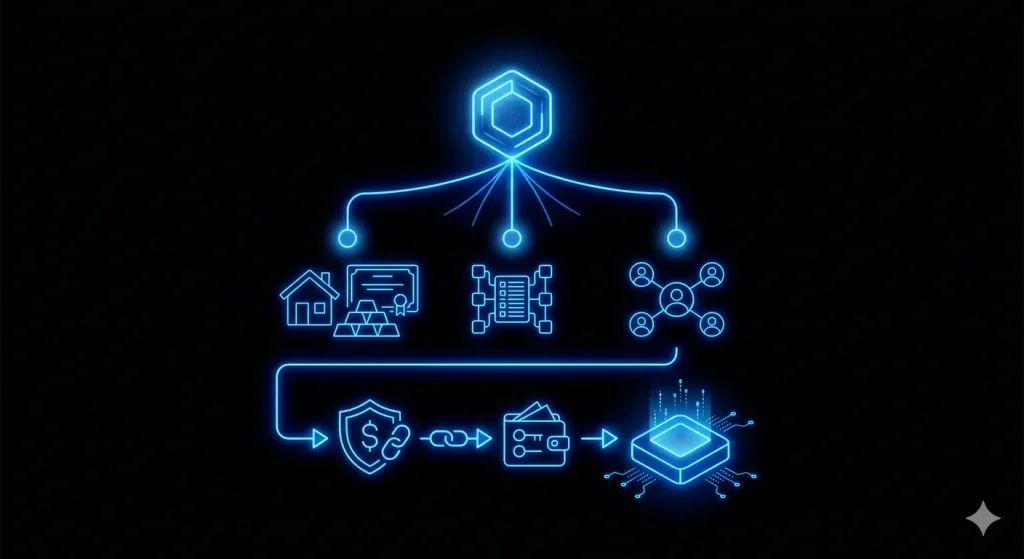
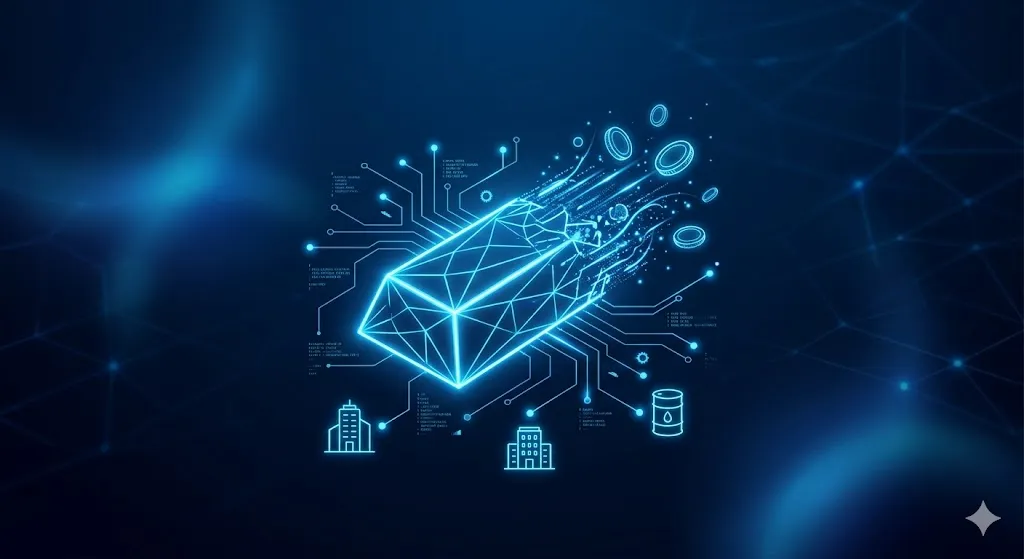
The digital asset ecosystem is evolving. Previously, blockchain activity centred on “circular” speculation, with assets backed by other crypto-native assets. The narrative for 2026 now focuses on tangible value, with Real-World Assets (RWA) bringing the global economy onto the blockchain.
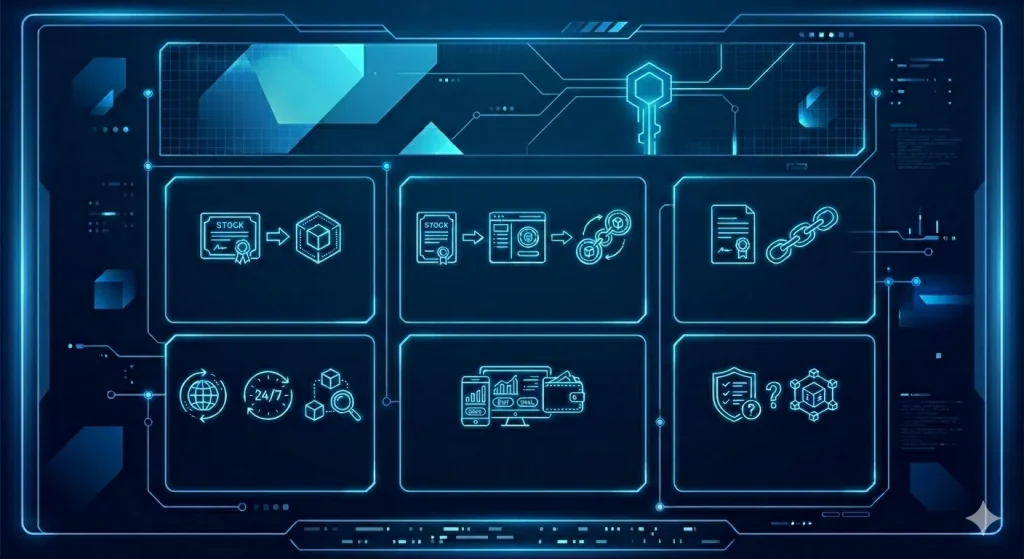
Major financial institutions are no longer watching. BlackRock’s BUIDL fund, Franklin Templeton’s tokenised money market funds, and the surge of tokenised U.S. Treasury bills show blockchain’s advantages for settlement and custody. By bringing assets like gold, real estate, and private credit onto the ledger, we gain 24/7 liquidity and fractional ownership. However, verifying off-chain events remains a key challenge.
The Transparency Gap
In Traditional Finance (TradFi), trust is maintained through a “black box” system of quarterly audits, manual reconciliations, and third-party custodians. This creates a transparency gap where investors only see the state of their assets once every few months. Blockchain technology promises to replace this with real-time transparency.
Objective of This Guide
As platforms like Indexpo democratize access to these instruments, robust monitoring is crucial. This guide outlines a framework for on-chain RWA analytics: defining essential metrics, a four-layer monitoring process, and the professional tools required for institutional-grade audits.
Why RWA Analytics Differ from Standard On-Chain Analysis
Analysing a tokenised real estate fund is fundamentally different from analysing a memecoin or a governance token like Uniswap (UNI).
Off-Chain vs On-Chain Linkage
Standard on-chain analysis focuses on “native” assets where the code itself represents the asset. For example, if you hold ETH (Ethereum’s native cryptocurrency), your ownership and rights are governed entirely by the Ethereum protocol. With RWAs, however, the token acts as a “claim” to an asset that exists outside the blockchain (such as gold, real estate, or a government bond). Because of this, analytics must include the Legal Wrapper—the set of contracts and laws linking the token to its real-world collateral. The Legal Wrapper ensures the smart contract is legally tied to the underlying asset, whether that’s a gold bar in a vault or a treasury bond held at a bank like BNY Mellon (Arslanian, 2024).
Counterparty Risk: Beyond the “Smart Money”
In typical DeFi analysis, we track “Smart Money” and observe whale activity. RWA analytics focuses on Counterparty Risk: monitoring not only price but also the Issuer and Custodian. If the issuer loses its banking license or the custodian’s vault is compromised, the token value could drop to zero, regardless of the code. Analytics tools must track the entity’s health, not merely token movement.
Key Data Points to Track (The Metrics)
To audit an RWA protocol effectively, investors must examine five core data categories.
1 Total Value Locked (TVL) vs Assets Under Management (AUM)
In DeFi, TVL often refers to tokens sitting in a pool. In the RWA sector, AUM is a more accurate term. It represents the actual market value of the real-world instruments backing the protocol.
- Why it matters: A rising AUM on a platform like Indexpo suggests that institutional capital is moving into the ecosystem, providing deeper liquidity for all participants.
2 Mint/Redeem Volume (Liquidity Inflows)
Unlike Bitcoin, which has a fixed supply, RWA tokens are “minted” when an investor deposits cash and “burned” (redeemed) when they withdraw their cash.
- The Analysis: Consistent minting indicates healthy demand. Conversely, in practice, sudden redemption spikes are one of the earliest warning signs, often preceding liquidity stress or issuer risk.
3 Collateralization Ratio & Proof of Reserves (PoR)
In practice, this is where most RWA projects fail. Proof of Reserves (PoR) is a method that uses automated data feeds (such as oracles, see below) to prove that for every 1 token recorded on-chain, there is $1 in assets held in a real bank account or vault. This mechanism connects the digital token to tangible, real-world assets.
- Key Metric: The collateralization ratio should ideally be 1:1 (100%) or higher (over-collateralised) for private credit protocols like Maple or Centrifuge.
4 Token Velocity & Distribution
- Token Velocity measures how often a token changes hands. High velocity benefits “Stablecoin-style” RWAs, but for “Yield-bearing” RWAs like tokenised T-bills, lower velocity signals that institutions are holding to collect interest.
- Distribution: This metric measures the distribution of token ownership across wallets. If tokens are concentrated in just a few wallets, it means a small group controls most of the asset. In RWA, a high concentration in “whitelisted” institutional wallets (wallets approved after Know Your Customer checks) suggests regulatory compliance. High concentration in anonymous wallets could signal potential risks.
5 Yield Transparency (The Source of Truth)
Yield in RWAs must be “Real Yield.” It should be traceable to a specific source:
- Treasury RWAs: Yield comes from U.S. Government bond coupons.
- Real Estate RWAs: Yield comes from monthly rental income.
- Private Credit: Yield comes from interest paid by corporate borrowers.
- Analytics help you verify that the protocol’s yield is genuine by tracing the income source. This ensures the protocol is actually generating returns by investments or lending, rather than paying out interest using new investors’ funds, a structure known as a Ponzi scheme, where returns are funded by incoming investments rather than legitimate profits.
The RWA Monitoring Framework
At Indexpo, we recommend a four-layer framework to ensure a 360-degree view of any tokenised asset.
Layer 1: Asset Verification (The Oracle Layer)
Because blockchains are “closed” systems—that is, they cannot access data stored outside their own network, they need Oracles. Oracles are systems that relay information (such as asset prices or account balances) from the real world to the blockchain, making external data available to smart contracts.
Hard Term – Oracle: A technology that acts as a bridge, securely fetching data from the “outside” world (like the price of gold or a bank balance) and putting it onto the blockchain so smart contracts can act on it.
Layer 1 Goal: Use tools like Chainlink’s PoR to ensure the physical asset truly exists.
Layer 2: Entity Resolution (Identifying the Players)
Blockchain addresses are unique identifiers consisting of strings of numbers and letters (for example, 0x123…). To effectively understand ownership or activity, we need Entity Resolution, the process of identifying the real-world organisation or individual behind a blockchain address.
Hard Term – Entity Resolution: The process of using advanced data science to identify the real-world organisation (like “BlackRock” or “J.P. Morgan”) behind a specific blockchain wallet address.
Layer 2 Goal: Use analytics tools such as Arkham or Nansen to confirm that the blockchain address labelled as the “Issuer” (the organisation providing the asset) is indeed controlled by the company it claims to be. This helps prevent fraud and ensures data accuracy.
Layer 3: Risk Assessment & Alerts
Institutional investors cannot watch a screen 24/7. Monitoring involves setting up “Threshold Alerts.”
- Example: Set an alert if the TVL of a protocol drops by more than 15% in 24 hours.
- Example: Set an alert if the RWA token “de-pegs” from its underlying value (e.g., if a $1.00 gold token starts trading at $0.98).
Layer 4: Compliance & Whitelist Monitoring
Most RWAs are strictly regulated and use Whitelists—a list of blockchain addresses belonging to users who have completed Know Your Customer (KYC) checks, a process in which users verify their identity with the platform.
Layer 4 Goal: Monitor whether “Whitelisted” addresses interact with “Blacklisted” or high-risk addresses, which could lead to the protocol being shut down by regulators.
Essential Tools for RWA Analytics
| Market Intelligence | Indexpo | These are the “Bloomberg Terminals” of RWA. They aggregate AUM, yield, and maturity dates across the entire sector. |
| Entity Tracking | Arkham Intelligence, Nansen | These allow you to see exactly which institutions (e.g., Wintermute, Cumberland) are providing liquidity to RWA pools. |
| Custom Auditing | Dune Analytics | Used to create custom dashboards for specific protocols like Ondo Finance or Centrifuge to track loan defaults in real-time. |
| On-Chain Forensics | Etherscan, Breadcrumbs | Essential for “Technical Auditing”—reviewing the smart contract code to see if the “Admin” has the power to freeze your funds. |
Conclusion: The Future of Global Finance
The integration of TradFi and Blockchain is no longer a “future” concept; it is happening now. As we have explored, the key to succeeding in this new era is not just access to assets—which platforms like Indexpo provide—but also the ability to audit those assets in real time.
On-chain analytics is moving from a niche hobby to the standard for global financial auditing. By utilising the frameworks of Asset Verification, Entity Resolution, and Risk Assessment, investors can enjoy the high yields of the RWA market while mitigating the risks of the “off-chain” world. In the next five years, the “Quarterly Audit” will become an artefact of the past, replaced by the 24/7, immutable truth of the blockchain.
FAQs
Q1: What is the main benefit of on-chain analytics for RWA?
The primary benefit is real-time transparency. Unlike traditional finance, where you wait months for a bank statement or audit, on-chain analytics allow you to verify collateral, ownership, and transaction history 24/7. This reduces “Information Asymmetry” (Chainlink, 2025).
Q2: How do I verify if a tokenised asset is actually backed by real-world collateral?
You should look for Proof of Reserves (PoR) data. Leading RWA projects use decentralised oracles to provide a live feed of the underlying bank account or vault balances directly to the blockchain.
Q3: Is RWA analysis different from analysing Bitcoin or Ethereum?
Yes. While BTC/ETH analysis focuses on network health and retail sentiment, RWA analysis focuses on legal compliance, issuer creditworthiness, and the accurate bridging of off-chain data to the chain.
References
- Arslanian, H. (2024). The Future of Finance: The Impact of Fintech, AI, and Crypto on Financial Services. Palgrave Macmillan.
- Chainlink. (2025). Understanding Proof of Reserves for Institutional Assets. Chainlink Research.
- Indexpo. (2026). The RWA Intelligence Report: Tokenised Stocks and Private Credit. Indexpo Platforms.